Most problems with a new refrigerator start on installation day: a fridge that doesn’t fit through the doorway, doors that swing shut on their own, a water line that drips behind the unit, or an ice maker that never fills. Here is how to install a refrigerator properly, what to prepare before delivery, and when it’s worth having a technician do it.
Before the Refrigerator Arrives
Measure the space, not just the old fridge
- Width, height and depth of the opening. Measure at several points, because cabinets and floors are rarely perfectly square.
- Ventilation clearance. Check the installation guide for the gap the manufacturer wants at the top, sides and back. A fridge squeezed in too tightly runs longer and hotter.
- Door swing. French doors and side-by-sides need room to open fully next to a wall or island, or the crisper drawers won’t come out.
- Counter-depth vs standard depth. A standard-depth model sticks out past the counters. That’s fine if you planned for it.
Measure the path
Check every doorway, hallway and turn between the street and the kitchen. If it’s tight, the doors and handles can usually be removed to gain a few inches.
Check power and water
- A properly grounded outlet behind the fridge, ideally on its own circuit. Avoid extension cords and adapters.
- For a fridge with an ice maker or water dispenser: a cold-water supply with its own shut-off valve within reach. Replace an old plastic or kinked line with a new braided or copper line.
Installation Step by Step
- Let it stand. If the refrigerator was moved on its side, stand it upright and wait before plugging it in so the oil in the compressor settles. The installation guide gives the time for your model.
- Remove packing. Take out the tape, foam and shipping blocks inside the fridge, and any shipping screws mentioned in the manual.
- Connect the water line. Shut off the supply, connect the line to the inlet valve, then turn the water back on slowly and check every fitting for drips. Leave a loop of slack so the fridge can be pulled out later without straining the line.
- Plug it in and slide it into place without crushing or kinking the water line or the power cord.
- Level it. Adjust the front leveling legs or rollers so the fridge is level side to side and tilted slightly back, which helps the doors close on their own. Line up French doors with the door alignment screw if one sits higher than the other.
- Flush the water system. Run water through the dispenser until it comes out clear and steady to clear air and carbon dust from a new filter.
The First 24 Hours
- Give it time to cool. A new fridge needs several hours to reach temperature and up to a day to settle. Load food once the fresh-food side is at 37°F or below and the freezer near 0°F.
- Throw out the first ice. The first batches can be small or taste of the new line. A new ice maker can take a day before it starts producing.
- New sounds are normal. Clicks from the defrost timer, gurgling refrigerant and the ice maker filling are all normal. Loud grinding or rattling is not.
- Check for drips. Look behind and under the fridge again after a few hours and the next morning.
Common Installation Mistakes
- Overtightening plastic compression fittings, which crack and leak days later.
- Pushing the fridge back so hard that the water line kinks and the ice maker stops filling.
- Skipping the leveling, which leads to doors that don’t seal, frost build-up and condensation.
- Forgetting the GFCI. If the outlet is GFCI-protected, check it first whenever the fridge goes silent: a tripped GFCI shuts it off without warning.
- Blocking the vents at the bottom front grille, which most refrigerators use for airflow.
When to Call a Professional
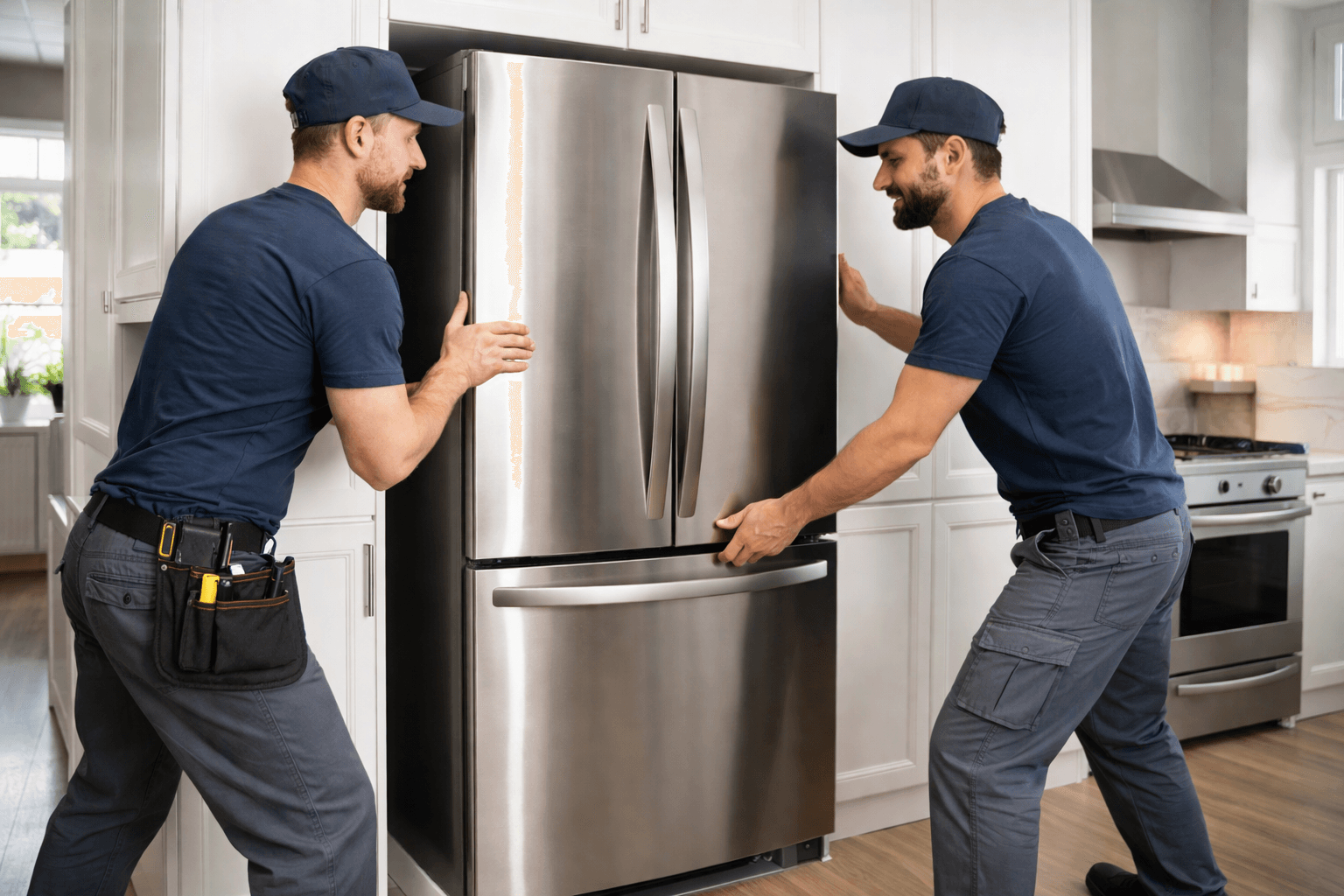
Built-in and panel-ready refrigerators (such as Sub-Zero, Thermador, Monogram or Miele) have to be secured to the cabinets and lined up with the panels. A professional installation is also worth it when a new water line has to be run, when the old fridge has to come out of a tight space, or when doors and handles have to be removed to get it in. If a newly installed refrigerator isn’t cooling, see what to check when a refrigerator won’t cool.
Frequently Asked Questions
How long after installation can I put food in?
When the fresh-food section reads 37°F or below and the freezer is near 0°F. That usually takes several hours. Use an appliance thermometer rather than guessing.
Can I lay a refrigerator down to move it?
Upright is always best. If it had to travel on its side, stand it up and wait before plugging it in. Check the manufacturer’s instructions for how long.
Why does my new fridge door not close by itself?
The fridge is probably sitting flat or leaning forward. Raise the front legs a little so it leans slightly back.
Do I need a plumber for the water line?
Not usually, if there is an existing shut-off valve behind the fridge. If a new line has to be run, it’s a job for a technician or plumber.
Do you install refrigerators in Sacramento?
Yes. We install and repair refrigerators in Sacramento, West Sacramento, Davis, Woodland, Dixon, Vacaville, Elk Grove and Rancho Cordova.
Book a Refrigerator Installation or Repair
Top Town Appliance Repair Service has more than 10 years of experience with refrigerators of all major brands. See our appliance repair and installation services, call (510) 677-7166 or book an appointment online. Monday to Saturday, 8:00 am to 6:00 pm.